
What is MEV protection?
Learn how MEV Shield helps protect supported swaps from frontrunning and sandwich attacks—and what risks still remain.

Lesson outline
MEV protection limits how much information others can see about a supported transaction before it is included in a block.
On Bittensor, MEV Shield encrypts eligible transactions while they are pending. This helps reduce exposure to frontrunning and sandwich attacks.
It does not guarantee your execution price, estimated output or transaction success. Normal market movement and other risks still apply.
What MEV means
MEV stands for maximal extractable value. It describes value someone may capture by influencing the order in which transactions are processed.
When the details of a pending swap are visible, an observer may try to place another transaction before or around it. A sandwich attack places transactions on both sides of a swap to move the price against the user and attempt to profit from the change.
Not every price change is MEV. Your swap’s own price impact, normal trading activity and changing market conditions can also affect the result.
How MEV Shield helps
MEV Shield encrypts supported signed transactions before they enter the public transaction queue.
Observers may see that an encrypted transaction has been submitted, but they cannot read the underlying swap details. The transaction is decrypted when the network prepares it for inclusion in a block.
Once decrypted, it still executes against the market conditions available at that time.
Technical details
The encrypted submission is called ciphertext. The block author decrypts the transaction while building the block.
What MEV Shield does not protect
MEV Shield helps reduce risks caused by readable pending transaction details. It does not protect against:
- Choosing the wrong wallet, token, subnet, validator or amount
- Signing on an impersonating or malicious website
- Sharing your recovery phrase or wallet credentials
- Normal market movement or your swap’s own price impact
- Insufficient balance, execution limits or network failure
- Liquidity, protocol or post-transaction market risk
PotaTao is non-custodial, but your wallet still controls every approval. Read each wallet request before signing.
Price impact, slippage and limits
- Price impact
The estimated price change caused by your own swap using available pool liquidity.
- Slippage
Additional movement between the quote and execution because market conditions changed.
- Max slippage
The furthest price movement allowed before the transaction fails instead of executing outside your limit.
MEV Shield handles a different risk. It limits readable pending transaction details; it does not set or guarantee your execution price.
A shielded transaction can still fail if its execution limit is exceeded.
Check your protection settings
PotaTao enables MEV Shield by default on supported swaps. You can confirm its status in Settings.
Max Slippage is a separate control. It sets how far the execution price may move before the transaction fails.
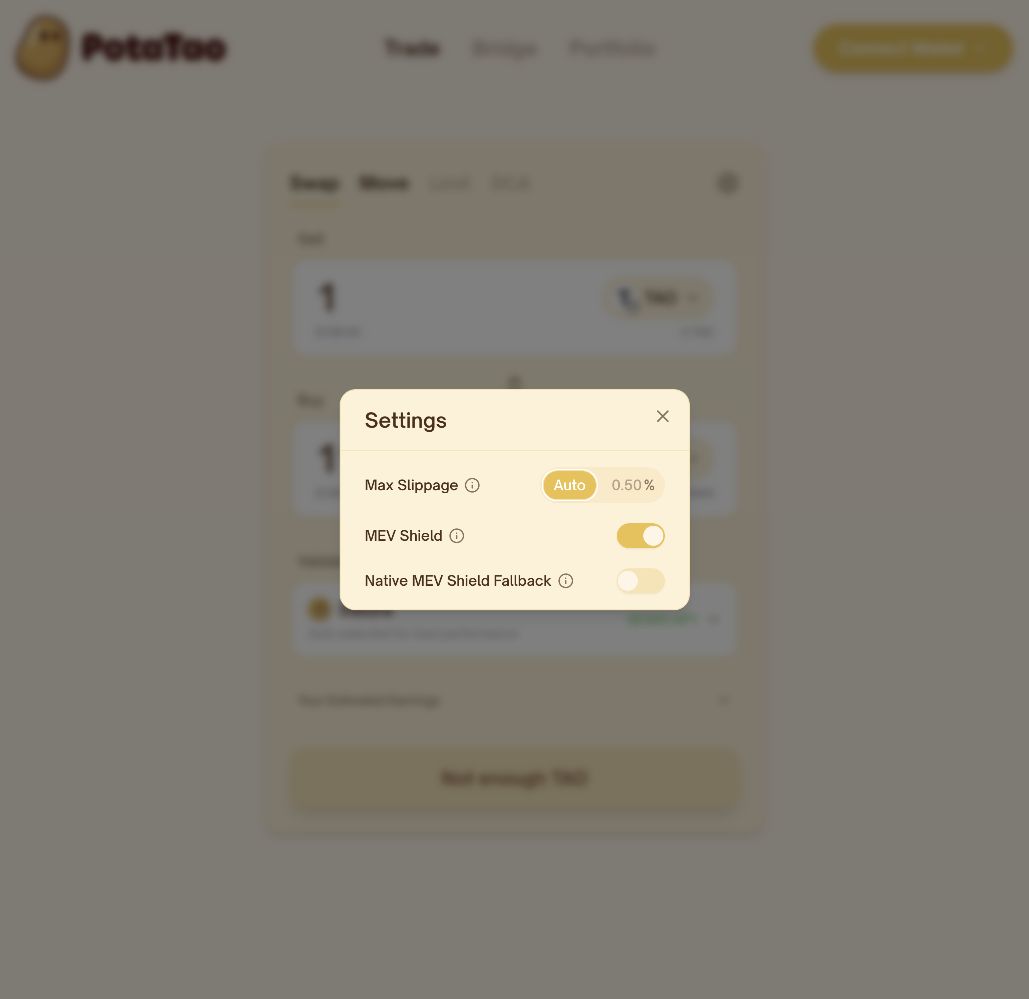
What is Native MEV Shield Fallback?
Native MEV Shield Fallback is an advanced option that changes how the shielded transaction is broadcast. Leave it unchanged unless you understand the wallet-broadcast flow and have read the current warning.
Defaults and available settings can change, so rely on the live PotaTao interface.
Review before you confirm
Before signing, check:
- The connected wallet
- The tokens, subnet and amount
- The validator, when one is shown
- The estimated output and fees
- The MEV Shield and slippage settings, when relevant
Then confirm that the wallet request matches the action shown in PotaTao.
MEV Shield reduces a specific transaction-ordering risk. It does not make the transaction risk-free.
FAQ
Is MEV protection the same as slippage protection?
No. MEV Shield limits readable pending transaction details. Max slippage limits how far the execution price may move.
Is MEV Shield available for every transaction?
No. It applies only to supported transaction flows. Check the live interface for the current status.
Can observers see an encrypted transaction?
They may see that an encrypted transaction was submitted, but they cannot read the underlying swap details from the public transaction queue.
When is the transaction decrypted?
It is decrypted when the network prepares it for inclusion in a block.
Can a shielded transaction still fail?
Yes. Insufficient balance, price limits, timing, network conditions or other execution requirements can still cause a failure.
Does MEV Shield protect my wallet?
No. It protects eligible pending transaction details. It cannot protect you from malicious websites, incorrect approvals or exposing your recovery phrase.
Can my token lose value after a protected swap?
Yes. MEV Shield does not protect against normal market movement or future token-price changes.
Recommended lessons
Keep going
Three useful lessons selected to build on what you have just learned.
Recommended next
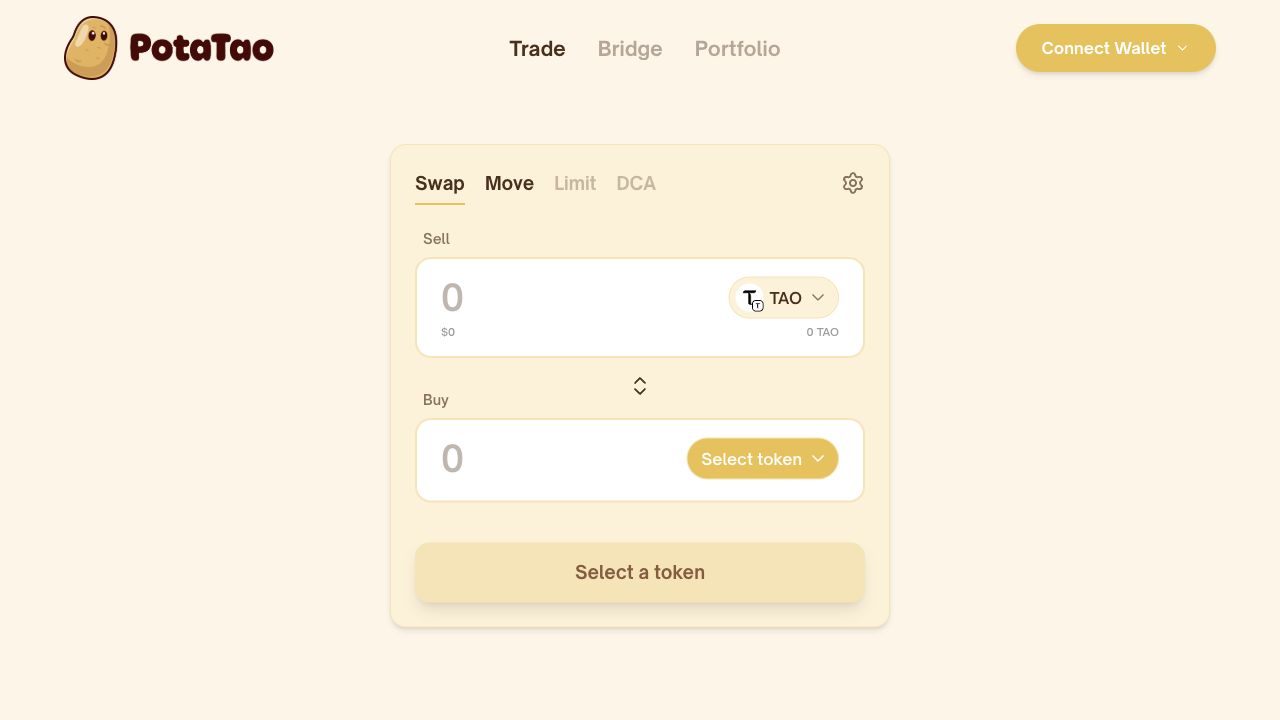
How to swap TAO for a subnet token
Use Swap to turn TAO into a subnet’s Alpha token. Choose the subnet, review the quote and validator, then confirm the swap.

Also recommended
How to stake TAO in a subnet
Learn how TAO becomes a staked Alpha position, choose a subnet and validator, and review the details before you confirm.

Also recommended
What are Alpha tokens?
Learn what Bittensor Alpha tokens represent, how they are priced, how rewards work, and what risks to understand before taking a position.
Ready to use PotaTao?
Open the app, connect your Bittensor wallet, and check every detail before you sign.
